26-IV
Voices
Following the blizzard of '26, I found my attitude had been altered by the flogging snow and the sudden change to the tropical outpost. It had been years since I had communicated with the lizards and birds in the area. Their message was the same: no one had learned anything. Theses life forms endured a viral quarantine yet had no recollection of the suffering they endured. It was  erased from their consciousness. In those moments of crisis, they had discovered absolutely nothing about themselves.
Nothing was on schedule. The parts were faulty. Equipment would fail with the slightest of bumps. It had become impossible to do a gig and not have to worry about the equipment failing. A complete breakdown in manufacturing and quality control. There's no way the company could survive. The word was out: the enterprise had no service department. Computer Girl refused to believe that management could be so careless. R&D hid in their lab coats. Finance fudged the books. Sales pretended like nothing happened and kept pushing their crap. Upper management golfed.
Lamentations 2:21 , the New International Version reads:
“Young and old lie together in the dust of the streets; my young men and young women have fallen by the sword. You have slain them in the day of your anger; you have slaughtered them without pity.” The harmful content in this biblical quote goes against  the values of the c-labs and it's affiliates. It is provided for access as part of the historical record. Thomas à Kempis says this is where it all begins, "A humble knowledge of oneself is a surer way to God than a deep search after learning."
We have to periodically post caveats about the accuracy of our content. We learned to deploy the word caveat in the data center during the 90's, especially when a programmer misplaced a decimal point by three characters . Giving caveats is an example of proper governance. In other words, everything here, there, and everywhere, that is said, should be taken with a grain of salt, preferably sea salt from the Caribbean Sea or to any moron who thinks it's called the Gulf of America and not the Gulf of Mexico, just take get out of here. Go look at a map.
Neuer Wald Ensembles
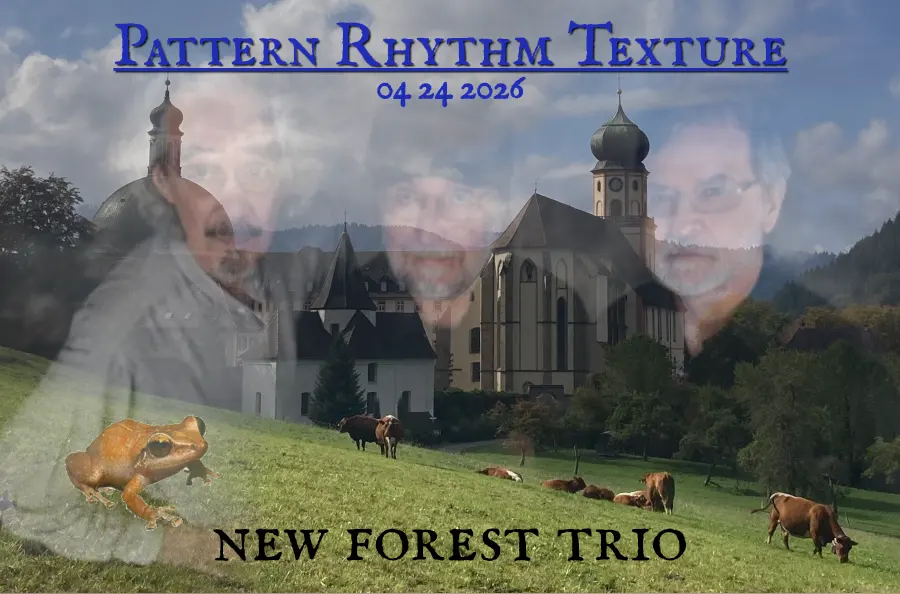
Abril Veinte Cuatro, 1493 AD. Time ends here. The colony has expanded. Expansion is inevitable and expected. We have supplied fuel for the duration of these expeditions. We've also consumed it all. Everywhere we look, the development has accelerated in a direction we don't control. Steer all ships back to their port.
turning points
The fog of the past materialized before him. In 1998 an expeditionary force attempted to embark from Lamberton to Middlesex. The pioneer spirit was restored.
"He was lost but now he's found," Armando muttered in a voice that transverses all disparate realities. "Dlocutor was born from a 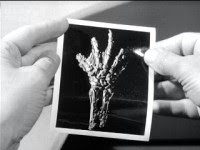 fossil. Many people wanted his formulae. They were kept locked, away in a trunk, inside a vault. The papers themselves were worth a million dollars as soon as he landed here. This place had a way of converging beings who need it, and also for whom it needs it in return. Bottom line, all he wanted to be was a porpoise when he grew up, but instead, he became a turtle. He could have been an accountant."
Light? What light? Does it illuminate anything? Upper right, a dark sun makes it dark..
Primal screams and debates
“Bill O., and I were class of '70. Mike was class of '71. Bill and I met at a weekly catechism at St. Anthony's. Bill and Mike must have met on the bus on the way to high school. We all moved in to the neighborhood at the same time. Immigrants, we all met at Brooktree Park to contemplate existence. It was 1968 through the seventies somewhere, and it was hot with: War, SSS, FBI, CIA, KKK, JDL, SDS, FALN, .. there was the draft, so we developed the BDS movement. Extracurricular readings included Hesse, Hegel, Mann, Kant, Kierkegaard, Kerouac, Kafka (the four k's), Ferlinghetti, Hegel, and Henry Miller. Harold introduced us to Eugène Ionesco. Mr.(Bob) Bingham, Mike's dad, introduced us to Poulenc. Few knew it but we often skipped school and took the Suburban Transit bus to McCosh Hall looking for a place somewhere for Nietzche and Christ. We would sneak in to lectures with the rest of the students. We were developing a future, a flavor of life for what we liked.
 “I and me are always too deeply in conversation: how could I endure it, if there were not a friend? The friend of the hermit is always the third one: the third one is the float which prevents the conversation of the two from sinking into the depth.”
― Friedrich Nietzsche,
“..hence, therefore, and thusly: We Spoketh Zarathustrian. We smiled sadly. We had thumbs out, hitchhiking on the shoulder of route 571, heading through the country to Woolworth Hall. Our parents didn't know we're out we think. It's very late at night. A driver picks us up we say we're students visiting a friend and have to get back to the campus, quick, before exams tomorrow. We knew when we got to Woolworth we'd check out all the pianos before heading to the choir college. When we got to the cuadro sagrado of Br. Scorcía, he'd let us into the chapel. We'd fire up the pipe organ and I would perform a Pistorius Cantata. There were chants and incense. The session would conclude with a crescendo. We pulled out all the stops and slammed out a loud chord with a loud Gregorian Yell. We split before the guards showed up..."
as told by Armando T., excerpted from his-story,
"Musicology, The Life and Times"
Pistorius Plays
We conceive of the individual animal as a small world, existing for its own sake, by its own means. Every creature is its own reason to be. All its parts have a direct effect on one another, a relationship to one another, thereby constantly renewing the circle of life; thus we are justified in considering every animal physiologically perfect. Viewed from within, no part of the animal is a useless or arbitrary product of the formative impulse (as so often thought). Externally, some parts may seem useless because the inner coherence of the animal nature has given them this form without regard to outer circumstance. Thus…[not] the question, What are they for? but rather, Where do they come from?
— Suhrkamp ed., vol 12, p. 121; trans. Douglas Miller, Scientific Studies
Either way, ..
©2026 c-labs @armdtv.org